
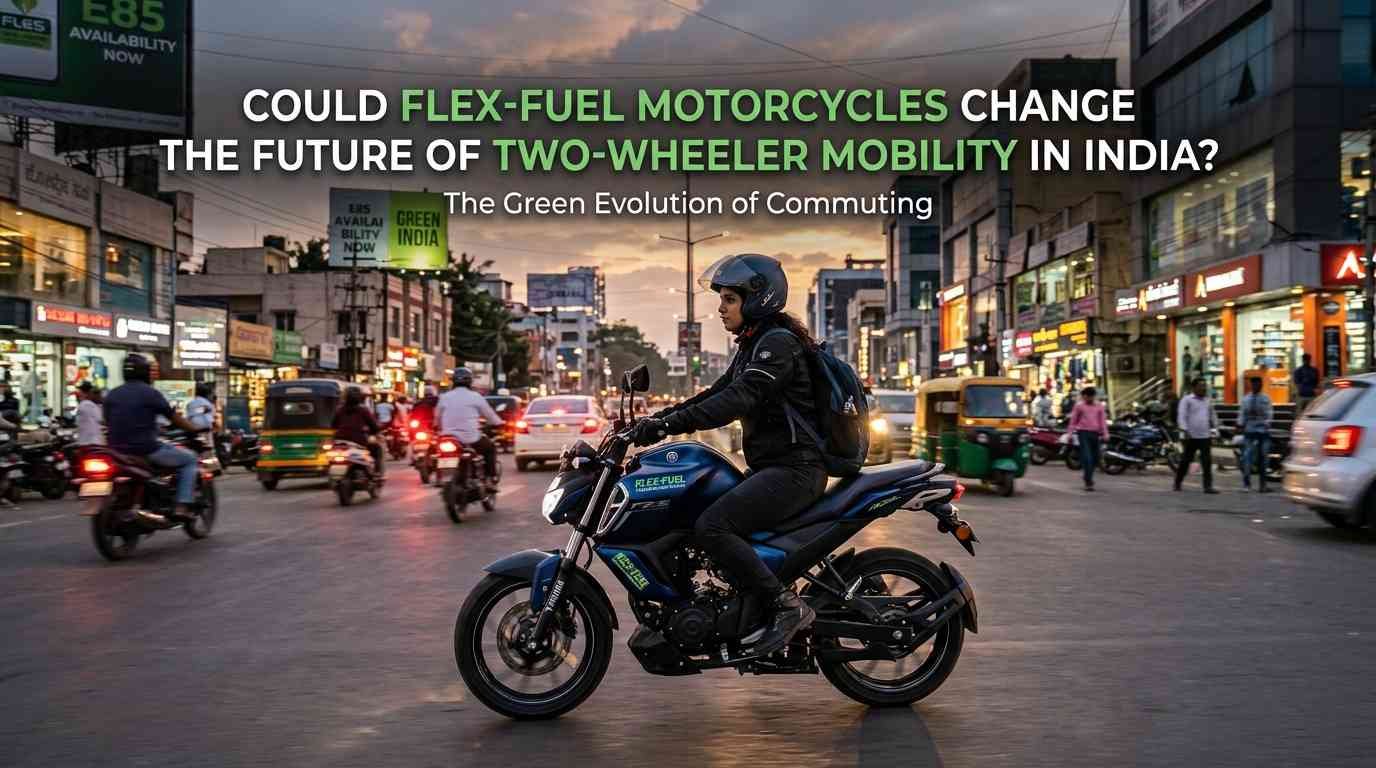
For many Indian riders, petrol remains part of everyday travel, from short commutes to longer rides between cities. At the same time, ethanol blending is changing the type of fuel available at petrol stations. Flex-fuel motorcycles offer a way to use different ethanol-petrol blends without moving directly to an electric powertrain.
That makes the technology relevant to India’s changing fuel landscape. Its future, however, depends on fuel availability, running costs and how easily riders can use these motorcycles in daily life.
Why Flex-Fuel Motorcycles Could Shape India’s Two-Wheeler Future
Making Ethanol Fuel Easier to Use
A flex-fuel motorcycle can operate on petrol containing different levels of ethanol. This removes the need for a separate motorcycle for each fuel blend. For instance, the Yamaha FZ Blue Flex supports fuel blends from E20 up to E85. Its 149cc fuel-injected engine manages these blends through its fuel system, allowing riders to use available fuel without changing motorcycles.
That flexibility becomes particularly useful as ethanol-blended petrol becomes increasingly common. However, higher ethanol blends still depend on suitable fuelling infrastructure.
Reducing Petrol Dependence
India imports much of the crude oil used to make its petrol and other fuels. Ethanol adds another component to petrol and can reduce some of the crude oil needed for transport fuel.
For higher blends such as E85, wider use will also depend on fuel availability and the number of compatible motorcycles. E85 is currently intended for flex-fuel vehicles designed and certified to use it, rather than being part of the nationwide base petrol blend.

Supporting Cleaner Two-Wheeler Travel
Fuel choice can also affect the emissions produced by a petrol motorcycle. Some ethanol blends may reduce certain emissions, although the result depends on the engine and fuel blend.
Flex-fuel technology therefore helps reduce certain tailpipe emissions. However, the environmental benefit depends on the ethanol production process, fuel blend and engine operation.
Ethanol also has lower energy density than petrol. As a result, higher ethanol blends can affect fuel consumption, meaning environmental benefits do not automatically translate into greater fuel economy.
Using Existing Fuel Networks
One practical advantage is that flex-fuel motorcycles still use petrol stations for refuelling. Refuelling therefore remains similar to that of a conventional petrol motorcycle.
This can be useful in areas where public charging is still limited. An E20-compatible motorcycle can use E20 petrol, while a flex-fuel model can also use higher blends such as E85 where available.
This means the move to flex-fuel does not require the same change in refuelling habits as switching to an electric motorcycle.
Giving Riders an Alternative to EVs
Electric and flex-fuel motorcycles take different approaches to reducing petrol use. EVs use batteries, while flex-fuel motorcycles keep a petrol engine that can use higher ethanol blends.
The choice can therefore depend on local charging access, fuel availability, riding distance and ownership requirements. Neither technology represents the same solution for every rider.
Meanwhile, flex-fuel motorcycles could serve as an intermediate path for riders who want to use higher ethanol blends without moving immediately to an electric motorcycle. Their wider adoption will depend on fuel supply, vehicle availability and real-world running costs.
Conclusion
Flex-fuel motorcycles give petrol-powered two-wheelers another way to use higher ethanol blends. Their ability to work with existing refuelling habits also makes them different from electric motorcycles.
However, wider use will depend on fuel availability, compatible vehicles and running costs. For India, flex-fuel technology could be part of the wider move toward greater ethanol use.