
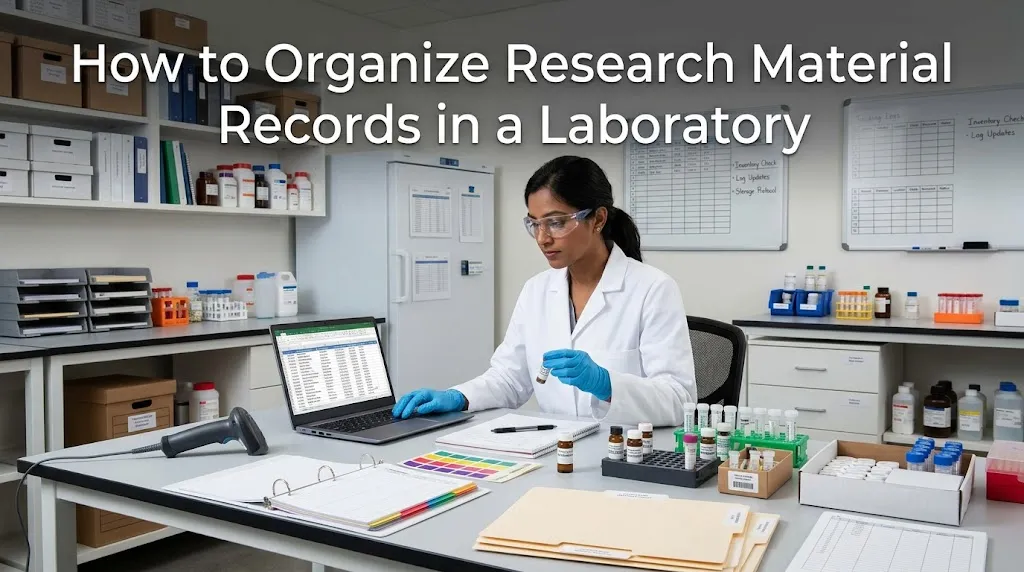
Organized laboratory records are essential for managing research materials accurately. When multiple products, suppliers, batches, and analytical reports are involved, a consistent recordkeeping system helps laboratory personnel locate information and maintain clear documentation.
For laboratories working with research materials in the UAE, an organized system can support procurement reviews, inventory management, and internal documentation procedures. Remy Research provides a supplier reference for reviewing research material information and associated records.
All materials discussed in this article are intended strictly for in-vitro laboratory research only. They are not intended for human or veterinary use.
1. Establish a Standard Recordkeeping Structure
The first step is to establish a consistent structure for recording research materials.
Every material should have an identifiable record containing its basic product information, supplier details, batch reference, and relevant supporting documents.
A laboratory can organize its records around these main categories:

- Supplier information.
- Product identification.
- Batch or lot references.
- Procurement documents.
- Receipt records.
- Certificates of Analysis.
- Analytical reports.
- Storage documentation.
- Internal review notes.
Using the same structure for different materials makes records easier to maintain and retrieve.
2. Maintain Separate Supplier Records
Supplier information should be recorded independently from individual product and batch records.
A supplier record may contain:
- Organization name.
- Contact details.
- Website or official supplier reference.
- Procurement reference.
- Documentation received.
- Communication history.
- Relevant internal review notes.
Keeping supplier information separate avoids repeating basic details in every product record.
It also makes it easier to identify which supplier provided a particular material when reviewing older inventory entries.
3. Create Individual Product Records
Each research material should have a product record that preserves its original description.
Depending on the available information, this may include:
- Product name.
- Product reference or catalogue number.
- Material description.
- Product format.
- Supplier reference.
- Associated documentation.
- Internal inventory category.
Product records should not combine different materials simply because their names or descriptions appear similar.
If a supplier changes a product description, the laboratory should retain enough information to understand the previous and updated references.
4. Keep Batch Records Separate
A product may be associated with multiple batches over time. Each batch should have its own record or clearly separated entry.
A batch record can include:
- Original batch or lot number.
- Associated product reference.
- Supplier name.
- Date received.
- Relevant procurement reference.
- Associated laboratory reports.
- Internal inventory reference.
- Review status.
This prevents documentation from one supply period being incorrectly associated with another.
A report for one identified sample should not automatically be used as evidence for every batch of the same product.
5. Organize Certificates and Analytical Reports
Certificates of Analysis and analytical reports should be stored with a clear reference to the material or sample they describe.
Useful document details include:
- Report or certificate number.
- Issuing laboratory.
- Sample identification.
- Batch reference, where provided.
- Testing date.
- Analytical method.
- Report issue date.
- Any stated limitations.
Laboratories may store original files in a dedicated folder while maintaining a reference to each document within their inventory system.
If a supplier provides a revised report, the original version should remain available so the document history is understandable.
6. Use a Consistent File Naming System
A consistent file naming structure can make digital records easier to search.
For example, laboratories may use:
ProductName_BatchReference_DocumentType_Date
A file name might identify the material, batch reference, document category, and date without changing any original information contained in the document.
Avoid vague file names such as:
- Document1
- New Report
- Final COA
- Updated File
Descriptive names reduce confusion when multiple reports are stored in the same folder.
7. Build a Central Laboratory Record Index
A central index can help personnel locate relevant records without opening every document.
A spreadsheet or laboratory information-management system may contain:
| Field | Description |
| Internal ID | Laboratory-assigned record number |
| Supplier | Supplier organization |
| Product | Original product description |
| Batch number | Supplier batch reference |
| Receipt date | Date material was received |
| COA reference | Associated certificate number |
| Report reference | Analytical report identifier |
| Storage location | Internal inventory location |
| Document status | Available, incomplete, or under review |
| Notes | Clarifications and unresolved issues |
The index should point to the original supporting documents rather than replacing them.
8. Record Storage Information Where Relevant
Some research materials may have specific storage requirements documented by the supplier.
Where applicable, laboratories should retain this information and maintain internal storage records according to their own procedures.
These records may include:
- Supplier-provided storage information.
- Date placed into storage.
- Inventory location.
- Relevant environmental monitoring records.
- Documented deviations.
- Internal review notes.
Supplier instructions and laboratory observations should be recorded separately so readers can distinguish between the two.
9. Maintain a Clear Document Revision History
Documentation may be updated when a supplier provides clarification or a corrected report.
A laboratory should preserve the original document and record subsequent versions.
A revision log may contain:
| Field | Information |
| Document reference | Original report or certificate number |
| Original date | Date of first document |
| Revised date | Date of updated version |
| Source | Organization providing the revision |
| Reason | Explanation, if provided |
| Received date | Date laboratory received the update |
| Review notes | Internal assessment |
This approach helps maintain a clear history without losing earlier records.
10. Manage Access and Record Security
Laboratory records may contain procurement information, supplier communications, and internal research references.
Access should therefore follow the organization’s information-management policies.
Practical measures may include:
- Role-based access permissions.
- Controlled editing rights.
- Regular backups.
- Secure document storage.
- Version control.
- Periodic review of access permissions.
These measures help reduce accidental changes, missing files, and unauthorized access.
11. Common Laboratory Recordkeeping Problems
Disorganized records can create unnecessary work during internal reviews.
Common issues include:
Duplicate entries: The same material may appear under different names or references.
Missing batch identifiers: Product records may not contain the original supplier batch number.
Unlinked reports: Analytical documents may be stored without a clear connection to the relevant sample.
Inconsistent file names: Similar reports may be difficult to distinguish.
Unrecorded revisions: Updated documents may replace earlier versions without preserving the history.
Unclear storage records: Supplier guidance and laboratory observations may be mixed together.
A standard recordkeeping structure can help address these problems.
12. Reviewing Supplier Documentation in the UAE
When reviewing Batch Documentation from a research material supplier, laboratories should make sure the documents can be connected to the appropriate product and sample records.
The review should establish whether the material is clearly identified, whether batch references are available, and whether analytical reports explain the sample they cover.
Where a supplier associates a tested sample with additional product formats, that relationship should be identified as supplier-provided mapping unless separate testing records establish otherwise.
A well-organized internal system makes these distinctions easier to preserve.
13. Practical Laboratory Recordkeeping Checklist
Before completing a material record, laboratory personnel can confirm:
- Supplier information has been recorded.
- Product identification is consistent.
- Batch references are preserved accurately.
- Receipt information is available.
- Relevant procurement documents are attached.
- Analytical reports are linked to the correct sample.
- COA and report references are recorded.
- Storage information is maintained where relevant.
- Document revisions are traceable.
- Digital files use consistent names.
- Access and backup procedures are followed.
- Missing information is clearly identified.
The checklist can be adapted to the laboratory’s own quality and documentation procedures.
Conclusion
Organizing research material records requires a consistent system for supplier information, product identification, batch references, analytical reports, procurement records, and internal inventory documentation.
A central index, clear file naming, separate batch records, and a reliable revision history can make laboratory information easier to retrieve and review.
The goal is not simply to store more documents. It is to maintain accurate connections between each material, its associated records, and the specific information those records establish.
All materials discussed in this article are intended strictly for in-vitro laboratory research only and are not intended for human or veterinary use.