Introduction
Relocating across continents brings a mix of excitement and challenge. When your journey involves moving your beloved furry companion, the logistical steps become critical. Understanding Pet Relocation from UK/Europe to UAE: Airline Approved Crates & Blood Tests ensures a safe, stress-free move. The United Arab Emirates enforces strict biosecurity rules regulated by the Ministry of Climate Change and Environment (MOCCAE).
Navigating air travel regulations, health certifications, and precise timelines can feel overwhelming. Missing a single blood test deadline or choosing the wrong container can lead to travel delays or quarantine at entry ports. This guide provides a clear, step-by-step roadmap covering every mandatory requirement.
Understanding UAE Import Regulations for Pets
The UAE classifies incoming animals according to rabies risk levels in their country of origin. The United Kingdom and most EU countries fall into low-risk or controlled-risk categories. However, official entry rules require strict compliance with documentation.
Before booking any flight, you must obtain an official MOCCAE Import Permit. This permit remains valid for 30 days from its issue date. Each passenger is limited to bringing a maximum of two pets into the country annually.
Additionally, the UAE strictly prohibits certain dog breeds from entering the country. Prohibited breeds typically include Pitbulls, Staffordshire Bull Terriers, Japanese Tosa, Dogo Argentino, and any crossbreeds of these. Checking the updated breed ban list early protects you from sudden customs rejections.
Microchipping and Core Vaccination Protocols
Your pet relocation preparation must follow a strict chronological order. The very first step is fitting your pet with an ISO 11784/11785 compliant 15-digit microchip. All veterinary records and laboratory test results must explicitly reference this unique microchip number. Vaccinations given before microchip insertion are considered invalid by border officials. After successful microchipping, your pet must receive a primary rabies vaccination or a valid booster. For dogs, core vaccines including Distemper, Hepatitis, Parvovirus, and Leptospirosis are required. Cats require core protections against Feline Viral Rhinotracheitis, Calicivirus, and Panleukopenia.

The rabies vaccine must be administered when the animal is at least 12 weeks old. It must remain valid throughout the journey and should be given at least 21 days before departure if it is a primary dose.
Rabies Blood Tests and Titration Requirements
A vital component of Pet Relocation from UK/Europe to UAE: Airline Approved Crates & Blood Tests is the Rabies Neutralizing Antibody Titration Test (RNATT). This blood test measures your pet’s immune response to the rabies vaccine. The blood sample must be drawn at least 30 days after the rabies vaccination. To satisfy UAE border authorities, the sample must be analyzed by an officially approved, accredited laboratory. The resulting antibody count must meet or exceed 0.5 IU/ml.
Depending on whether your origin country is classified as rabies-controlled, a mandatory waiting period may apply. For many non-listed origins, pets must wait 90 days from the blood sampling date before entering the UAE. Starting this process 3 to 4 months before your intended move date avoids scheduling issues.
Selecting Airline Approved Crates (IATA Standards)
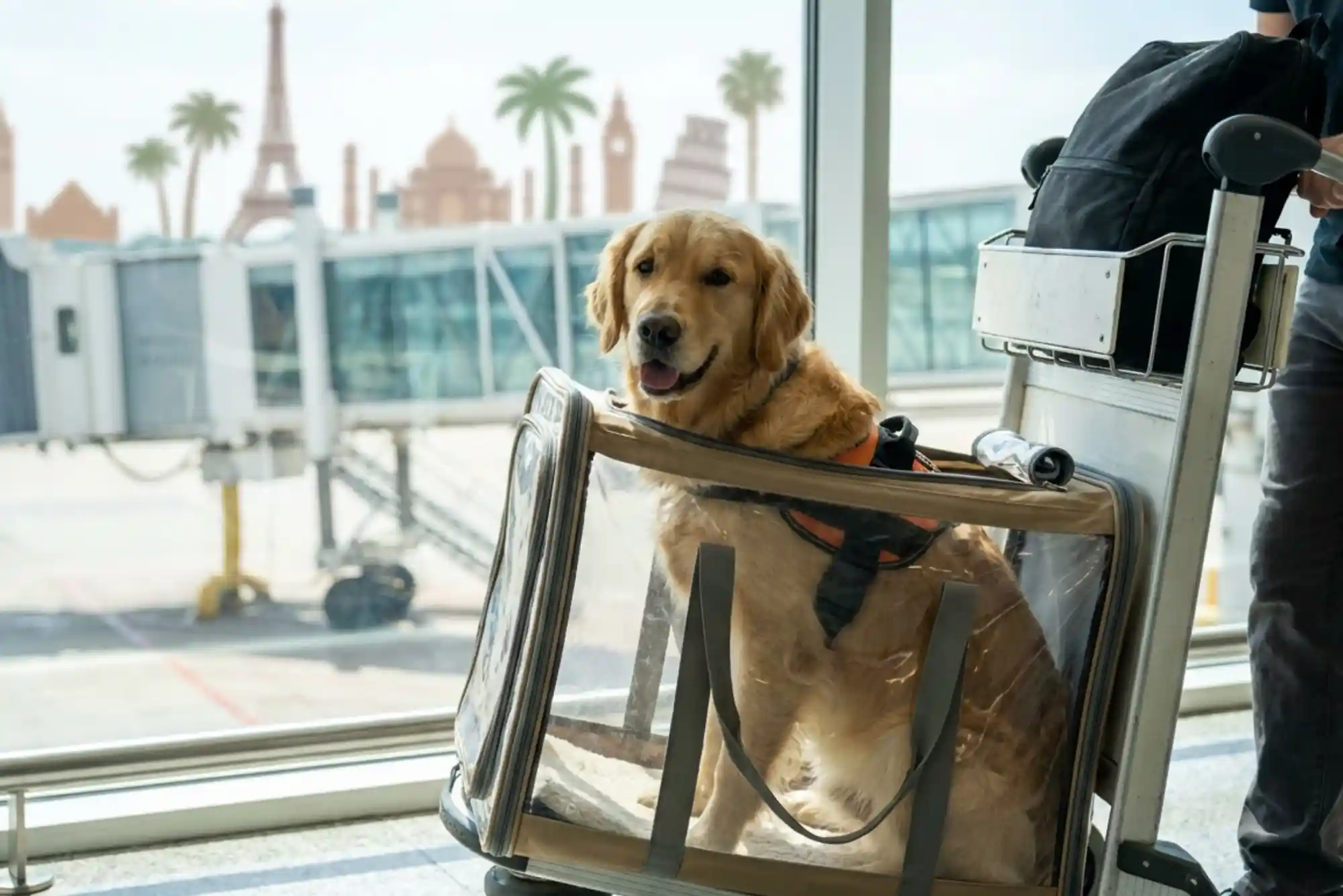
Air transit safety depends on selecting the correct container. Airlines strictly enforce the International Air Transport Association (IATA) Live Animals Regulations (LAR). Using a standard retail pet carrier will lead to rejection at the cargo check-in desk. An IATA-compliant crate must be constructed from rigid plastic, wood, or metal. Soft-sided bags or crates with top-opening doors are strictly forbidden for cargo travel. The container must feature a secure, central locking mechanism that prevents accidental opening.
Proper ventilation is mandatory. The crate must feature adequate ventilation openings on three sides for domestic flights, and on all four sides for international long-haul flights. The interior grid mesh must be small enough to prevent your pet’s nose or paws from sticking out.
Inside the crate, water containers must be attached to the wire door so ground handlers can refill them without opening the box. The bottom floor must be leak-proof and lined with absorbent, non-toxic bedding material like puppy pads or familiar blankets.
Sizing Your Pet Crate Correctly
Proper sizing directly impacts your pet’s comfort and safety during travel. Airlines will reject any crate that appears too small for the animal inside.
To determine the correct dimensions, measure your pet accurately while they are standing up straight:
-
Length: Measure from the tip of the nose to the base of the tail. Add half the leg length to this measurement.
-
Width: Measure across the widest point of your pet’s shoulders, then multiply by two.
-
Height: Measure from the floor to the tip of the ears or the top of the head, whichever is higher.
Your pet must be able to stand completely erect without touching the ceiling with their ears or head. They must also be able to turn around comfortably and lie down in a natural position.
Crate Training and Comfort Optimization
Introducing your pet to their travel crate well in advance reduces flight anxiety significantly. Start by placing the crate inside your living space with the door completely removed or secured open.
Place familiar items inside, such as a favorite bed or an unwashed t-shirt carrying your scent. Feed your pet inside the container to build positive associations. Gradually transition to closing the door for short intervals while rewarding calm behavior.
Never use sedatives or tranquilizers for air travel unless specifically advised by an avian or exotic veterinary specialist. Sedatives alter cardiovascular responses, suppress respiratory functions, and disrupt balance during turbulence. Crate acclimation remains the safest way to keep your pet calm.
Final Veterinary Health Certificates and Endorsements
During the final ten days before your flight, you must schedule a final health check with an accredited veterinarian. The vet will inspect your pet to confirm they are fit to travel and free from contagious conditions.
The official Health Certificate must state the microchip number, vaccination history, and titer test results. In the UK, this document must be issued by an Official Veterinarian (OV) and endorsed by APHA. In European countries, an official state veterinary service endorsement or a fully updated EU Pet Passport is required.
Parasite treatments are also mandatory right before travel. Treatments against tapeworms (Praziquantel) and external parasites (fleas and ticks) must be administered and recorded in the health paperwork shortly before departure.
Flight Booking and Arrival Procedures in the UAE
Most airlines traveling to the UAE require pets to travel as manifest cargo under air waybill conditions. This system guarantees temperature-controlled environments during transit, tarmac transfers, and holding periods.
Direct flights are strongly recommended to reduce transit stress. Major carriers like Emirates and Etihad maintain dedicated, climate-controlled live animal handling centers at their main hubs in Dubai and Abu Dhabi.
Upon arrival in the UAE, your pet will be transferred directly to the airport cargo quarantine center. Official MOCCAE veterinary inspectors will verify documents, scan the microchip, and examine your animal. Once all paperwork clears customs inspection, your pet will be released to you or your designated IPATA pet courier.
Frequently Asked Questions
How long before moving to the UAE should I start pet preparation?
You should begin preparations at least 3 to 4 months before your move. Microchipping, rabies vaccinations, blood draw waits, and lab processing times require several weeks of buffer time.
Can I carry my dog or cat in the cabin from Europe to UAE?
Most commercial airlines operating routes into the UAE require pets to enter as manifest cargo. Certain airlines allow small falcons or service animals in the cabin, but standard pets typically fly in climate-controlled cargo compartments.
What happens if my pet fails the rabies blood test?
If the antibody count falls below the 0.5 IU/ml threshold, your pet must receive a booster vaccination. You will need to wait another 30 days before drawing a new blood sample for testing.
Are snub-nosed (brachycephalic) breeds allowed to fly to the UAE?
Many airlines enforce seasonal or permanent bans on snub-nosed dogs and cats (such as Bulldogs, Pugs, and Persian cats) due to respiratory risks during heat exposure. Always verify your chosen airline’s specific policies for flat-faced breeds.
Smooth Transit for Your Beloved Companion
Relocating your pet from Europe or the UK to the UAE requires careful planning, strict timing, and adherence to official regulations. By following these guidelines for Pet Relocation from UK/Europe to UAE: Airline Approved Crates & Blood Tests, you can avoid unexpected delays and keep your pet safe throughout their journey.
Start early by confirming your pet’s microchip, scheduling required vaccinations, and booking the rabies blood test. Measure your pet accurately to secure an IATA-compliant crate, and introduce them to it early to build confidence.